I bibliotecari sono a disposizione dell'utenza per ricerche bibliografiche sul catalogo
e per assistenza nell'uso delle risorse della Biblioteca digitale.
Il personale fornisce inoltre informazioni su tutti i servizi bibliotecari.

venerdì 19 dicembre 2014

Sezione Diritto e Società

 
Cerca Copia
Law as a leap of faith

Autore : John Gardner

How do laws resemble rules of games, moral rules, personal rules, rules found in religious teachings, school rules, and so on? Are laws rules at all? Are they all made by human beings? And if so how should we go about interpreting them? How are they organized into systems, and what does it mean for these systems to have 'constitutions'? Should everyone want to live under a system of law? Is there a special kind of 'legal justice'? Does it consist simply in applying the law of the system? And how does it relate to the ideal of 'the rule of law'? These and other classic questions in the philosophy of law form the subject-matter of Law as a Leap of Faith. In this book John Gardner collects, revisits, and supplements fifteen years of celebrated writings on general questions about law and legal systems - writings in which he attempts, without loss of philosophical finesse or insight, to cut through some of the technicalities with which the subject has become encrusted in the late twentieth century. Taking his agenda broadly from H.L.A. Hart's The Concept of Law (1961), Gardner shows how the key ideas in that work live on, and how they have been and can still be improved in modest ways to meet important criticisms - in some cases by concession, in some cases by circumvention, and in some cases by restatement. In the process Gardner engages with key ideas of other modern giants of the subject including Kelsen, Holmes, Raz, and Dworkin. Most importantly he presents the main elements of his own unique and refreshingly direct way of thinking about law, brought together in one place for the first time.


Sezione Diritto e Società

Cerca Copia
Fault Lines of Globalization. Legal order and the politics of AS-Legality

Autore : Hans Lindahl

The question whether and how boundaries might individuate and thereby be constitutive features of any imaginable legal order has yet to be addressed in a systematic and comprehensive manner by legal and political theory. This book seeks to address this important omission, providing an original contribution to the debate about law in a global setting. Against the widely endorsed assumption that we are now moving towards law without boundaries, it argues that every imaginable legal order, global or otherwise, is bounded in space, time, membership, and content. The book is built up around three main insights. Firstly, that legal orders can best be understood as a form of joint action in which authorities mediate and uphold who ought to do what, where, and when with a view to realising the normative point of acting together. Secondly, that behaviour can call into question the boundaries that determine who ought to do what, where and when: a-legality. Thirdly, that this a-legality reveals boundaries as marking a limit and, to a lesser or greater extent, a fault line of the respective legal order. Legal boundaries reveal ways of ordering the who, what, where, and when of behaviour which have been excluded, yet which remain within the range of practical possibilities accessible to the collective: limits. However legal boundaries also intimate an order which exceeds the range of possibilities accessible to that collective - the fault line of the respective legal order. Careful analysis of a wide range of legal orders, including nomadism, Roman law, classical international law, ius gentium, multinationals, cyberlaw, lex mercatoria, the EU, global regimes of human rights, and space law validates this thesis. What sense, then, can we make of the normativity of the law, if there can be no inclusion without exclusion? Arguing that legal and political theories misunderstand how legal boundaries do their work of including and excluding, the book develops a normative theory of legal order which is alternative to both communitarianism and cosmopolitanism.

Sezione Diritto e Società

Cerca Copia
The Ajax dilemma. Justice, fairness and rewards

Autore : Paul Woodeuff

We live in a world where CEOs give themselves million dollar bonuses even as their companies go bankrupt and ordinary workers are laid off; where athletes make millions while teachers struggle to survive; a world, in short, where rewards are often unfairly meted out. In The Ajax Dilemma, Paul Woodruff examines one of today's most pressing moral issues: how to distribute rewards and public recognition without damaging the social fabric. How should we honor those whose behavior and achievement is essential to our overall success? Is it fair or right to lavish rewards on the superstar at the expense of the hardworking rank-and-file? How do we distinguish an impartial fairness from what is truly just? Woodruff builds his answer to these questions around the ancient conflict between Ajax and Odysseus over the armor of the slain warrior Achilles. King Agamemnon arranges a speech contest to decide the issue. Ajax, the loyal workhorse, loses the contest, and the priceless armor, to Odysseus, the brilliantly deceptive strategist who will lead the Greeks to victory. Deeply insulted, Ajax goes on a rampage and commits suicide, and in his rage we see the resentment of every loyal worker who has been passed over in favor of those who are more gifted, or whose skills are more highly valued. How should we deal with the "Ajax dilemma"? Woodruff argues that while we can never create a perfect system for distributing just rewards, we can recognize the essential role that wisdom, compassion, moderation, and respect must play if we are to restore the basic sense of justice on which all communities depend. This short, thoughtful book, written with Woodruff's characteristic elegance, investigates some of the most bitterly divisive issues in American today.

Sezione Diritto e Società

Cerca Copia
Democracy and disenfranchisement. The moral of electoral Exclusiobns

Autore : Claudio Lopez Guerra

The denial of voting rights to certain types of persons continues to be a moral problem of practical significance. The disenfranchisement of persons with mental impairments, minors, noncitizen residents, nonresident citizens, and criminal offenders is a matter of controversy in many countries. How should we think morally about electoral exclusions? What should we conclude about these particular cases? This book proposes a set of principles, called the Critical Suffrage Doctrine, that defies conventional beliefs on the legitimate denial of the franchise. According to the Critical Suffrage Doctrine, in some realistic circumstances it is morally acceptable to adopt an alternative to universal suffrage that would exclude the vast majority of sane adults for being largely uninformed. Thus, contrary to what most people believe, current controversies on the franchise are not about exploring the limits of a basic moral right. Regarding such controversies, the Critical Suffrage Doctrine establishes that, in polities with universal suffrage, the blanket disenfranchisement of minors and the mentally impaired cannot be justified; that noncitizen residents should be allowed to vote; that excluding nonresident citizens is permissible; and that criminal offenders should not be disenfranchised-although facilitating voting from prison is not required in all contexts. Political theorists have rarely submitted the franchise to serious scrutiny. Hence this study makes a contribution to a largely neglected and important subject.

Sezione Diritto e Società

Cerca Copia
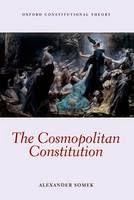
The cosmopolitan constitution

Autore : Alexander Somek

Originally the constitution was expected to express and channel popular sovereignty. It was the work of freedom, springing from and facilitating collective self-determination. After the Second World War this perspective changed: the modern constitution owes its authority not only to collective authorship, it also must commit itself credibly to human rights. Thus people recede into the background, and the national constitution becomes embedded into one or other system of 'peer review' among nations. This is what Alexander Somek argues is the creation of the cosmopolitan constitution. Reconstructing what he considers to be the three stages in the development of constitutionalism, he argues that the cosmopolitan constitution is not a blueprint for the constitution beyond the nation state, let alone a constitution of the international community; rather, it stands for constitutional law reaching out beyond its national bounds. This cosmopolitan constitution has two faces: the first, political, face reflects the changed circumstances of constitutional authority. It conceives itself as constrained by international human rights protection, firmly committed to combating discrimination on the grounds of nationality, and to embracing strategies for managing its interaction with other sites of authority, such as the United Nations. The second, administrative, face of the cosmopolitan constitution reveals the demise of political authority, which has been traditionally vested in representative bodies. Political processes yield to various, and often informal, strategies of policy co-ordination so long as there are no reasons to fear that the elementary civil rights might be severely interfered with. It represents constitutional authority for an administered world.

Sezione Diritto e Società

Cerca Copia
On What Matters
volume one

Autore : Derek Parfit

On What Matters is a major work in moral philosophy. It is the long-awaited follow-up to Derek Parfit's 1984 book Reasons and Persons, one of the landmarks of twentieth-century philosophy. In this first volume Parfit presents a powerful new treatment of reasons and rationality, and a critical examination of three systematic moral theories -- Kant's ethics, contractualism, and consequentialism -- leading to his own ground-breaking synthetic conclusion. Along the way he discusses a wide range of moral issues, such as the significance of consent, treating people as a means rather than an end, and free will and responsibility. On What Matters is already the most-discussed work in moral philosophy: its publication is likely to establish it as a modern classic which everyone working on moral philosophy will have to read, and which many others will turn to for stimulation and illumination.


mercoledì 17 dicembre 2014

Sezione Diritto e Società

Cerca Copia
Thick concepts

Autore : Simon Kirchin

What is the difference between judging someone to be good and judging them to be kind? Both judgements are typically positive, but the latter seems to offer more description of the person: we get a more specific sense of what they are like. Very general evaluative concepts (such as good, bad, right and wrong) are referred to as thin concepts, whilst more specific ones (including brave, rude, gracious, wicked, sympathetic, and mean) are termed thick concepts. In this volume, an international team of experts addresses the questions that this distinction opens up. How do the descriptive and evaluative functions or elements of thick concepts combine with each other? Are these functions or elements separable in the first place? Is there a sharp division between thin and thick concepts? Can we mark interesting further distinctions between how thick ethical concepts work and how other thick concepts work, such as those found in aesthetics and epistemology? How, if at all, are thick concepts related to reasons and action? These questions, and others, touch on some of the deepest philosophical issues about the evaluative and normative. They force us to think hard about the place of the evaluative in a (seemingly) nonevaluative world, and raise fascinating issues about how language works.

Sezione Diritto e Società


Cerca Copia
Knowing right from wrong

Autore : Kieran Setiya

Can we have objective knowledge of right and wrong, of how we should live and what there is reason to do? The thought that we can is beset by sceptical problems. In the face of radical disagreement, can we be sure that we are not deceived? If the facts are independent of what we think, is our reliability a mere coincidence? Can it be anything but luck when our beliefs are true? In Knowing Right From Wrong, Kieran Setiya confronts these questions in their most compelling and articulate forms: the argument from ethical disagreement; the argument from reliability and coincidence; and the argument from accidental truth. In order to resist the inference from disagreement to scepticism, he argues, we must reject epistemologies of intuition, coherence, and reflective equilibrium. The problem of disagreement can be solved only if the basic standards of epistemology in ethics are biased towards the truth. In order to solve the problem of coincidence, we must embrace arguments for reliability in ethics that rely on ethical beliefs. Such arguments do not beg the question in an epistemically damaging way. And in order to make sense of ethical knowledge as non-accidental truth, we must give up the independence of ethical fact and belief. We can do so without implausible predictions of convergence or relativity if the facts are bound to us through the natural history of human life. If there is objective ethical knowledge, human nature is its source.

Sezione Diritto e Società

Cerca Copia
Moral Error theory, history, critique, defebce

Autore : Jonas Olson

Jonas Olson presents a critical survey of moral error theory, the view that there are no moral facts and so all moral claims are false. In Part I (History), he explores the historical context of the debate, and discusses the moral error theories of David Hume and of some more or less influential twentieth century philosophers, including Axel Hagerstrom, Bertrand Russell, Ludwig Wittgenstein, and Richard Robinson. He argues that the early cases for moral error theory are suggestive but that they would have been stronger had they included something like J. L. Mackie's arguments that moral properties and facts are metaphysically queer. Part II (Critique) focuses on these arguments. Olson identifies four queerness arguments, concerning supervenience, knowledge, motivation, and irreducible normativity, and goes on to establish that while the first three are not compelling, the fourth has considerable force, especially when combined with debunking explanations of why we tend to believe that there are moral properties and facts when in fact there are none. One conclusion of Part II is that a plausible error theory takes the form of an error theory about irreducible normativity. In Part III (Defence), Olson considers challenges according to which that kind of error theory has problematic ramifications regarding hypothetical reasons, epistemic reasons, and deliberation. He ends his discussion with a consideration of the implications of moral error theory for ordinary moral thought and talk, and for normative theorizing.

Sezione Diritto e Società

Cerca Copia
On Loyalty and Loyalties

Autore : John Kleinig

Deep friendship may express profound loyalty, but so too may virulent nationalism. What can and should we say about this Janus-faced virtue of the will? This volume explores at length the contours of an important and troubling virtue - its cognates, contrasts, and perversions; its strengths and weaknesses; its awkward relations with universal morality; its oppositional form and limits; as well as the ways in which it functions in various associative connections, such as friendship and familial relations, organizations and professions, nations, countries, and religious tradition.

Sezione Diritto e Società

Manipulation. Theory and practice

Autore : C. Coons, M. Weber 
Cerca Copia

In all groups - from couples to nation-states - people influence one another. Much of this influence is benign, for example giving advice to friends or serving as role models for our children and students. Some forms of influence, however, are clearly morally suspect, such as threats of violence and blackmail. A great deal of attention has been paid to one form of morally suspect influence, namely coercion. Less attention has been paid to what might be a more pervasive form of influence: manipulation. The essays in this volume address this relative imbalance by focusing on manipulation, examining its nature, moral status, and its significance in personal and social life. They address a number of central questions: What counts as manipulation? How is it distinguished from coercion and ordinary rational persuasion? Is it always wrong, or can it sometimes be justified, and if so, when? Is manipulative influence more benign than coercion? Can one manipulate unintentionally? How does being manipulated to act bear on one's moral responsibly for so acting? Given various answers to these questions, what should we think of practices such as advertising and seduction?
 

Sezione Diritto e Società

Beyond humanity? The ethics of biomedical enhancement

Autore : Allen Buchanan 

Cerca Copia


Biotechnologies already on the horizon will enable us to be smarter, have better memories, be stronger and quicker, have more stamina, live longer, be more resistant to diseases, and enjoy richer emotional lives. To some of us, these prospects are heartening; to others, they are dreadful. In Beyond Humanity a leading philosopher offers a powerful and controversial exploration of urgent ethical issues concerning human enhancement. These raise enduring questions about what it is to be human, about individuality, about our relationship to nature, and about what sort of society we should strive to have. Allen E. Buchanan urges that the debate about enhancement needs to be informed by a proper understanding of evolutionary biology, which has discredited the simplistic conceptions of human nature used by many opponents of enhancement. He argues that there are powerful reasons for us to embark on the enhancement enterprise, and no objections to enhancement that are sufficient to outweigh them.

Sezione Diritto e Società

Cerca Copia
After economic democracy for the 21st century

Autore : Tom Malleson

These days, it is easy to be cynical about democracy. Even though there are more democratic societies now (119 and counting) than ever before, skeptics can point to low turnouts in national elections, the degree to which money corrupts the process, and the difficulties of mass participation in complex systems as just a few reasons the system is flawed. The Occupy movement in 2011 proved that there is an emphatic dissatisfaction with the current state of affairs, particularly with the economy, but, ultimately, it failed to produce any coherent vision for social change. So what should progressives be working toward? What should the economic vision be for the 21st century? After Occupy boldly argues that democracy should not just be a feature of political institutions, but of economic institutions as well. In fact, despite the importance of the economy in democratic societies, there is very little about it that is democratic. Questioning whether the lack of democracy in the economy might be unjust, Tom Malleson scrutinizes workplaces, the market, and financial and investment institutions to consider the pros and cons of democratizing each. He considers examples of successful efforts toward economic democracy enacted across the globe, from worker cooperatives in Spain to credit unions and participatory budgeting measures in Brazil and questions the feasibility of expanding each. The book offers the first comprehensive and radical vision for democracy in the economy, but it is far from utopian. Ultimately, After Occupy offers possibility, demonstrating in a remarkably tangible way that when political democracy evolves to include economic democracy, our societies will have a chance of meaningful equality for all.

Sezione Diritto e Società

Cerca Copia
Climate Justice. Vulnerability and Protection

Autore : Henry Shue

The fruit of twenty years of moral reflection on the emerging greatest challenge to humanity of the 21st century, these far-sighted and influential essays by a pioneering practical philosopher on the tangled questions of justice between nations and justice across generations confronting all attempts at international cooperation in controlling climate change sharply crystallize the central choices and offer constructive directions forward. Arguing that persistent attempts by U.S. negotiators to avoid the fundamental issues of justice at the heart of persistent international disagreement on the terms of a binding multilateral treaty are as morally misguided as they are diplomatically counter-productive, Henry Shue has built a case that efforts to price carbon (through cap-and-trade or carbon taxes) as a mechanism to drive down greenhouse gas emissions by the affluent must, for both ethical and political reasons, be complemented by international transfers that temporarily subsidize the development of non-carbon energy and its dissemination to those trapped in poverty. Our vital escape from climate change rooted in the dominance of the fossil fuel regime ought not, and in fact need not, come at the price of de-railing the escape of the world's poorest from poverty rooted in lack of affordable energy that does not undermine the climate. The momentum of changes in the planetary climate system and the political inertia of energy regimes mean that future generations, like the poorest of the present, are vulnerable to our decisions, and they have rights not to be left helpless by those of us with the power instead to leave them hope.

Sezione Diritto e Società

Cerca Copia
Equality and opportunity

Autore : Shlomo Segall


Egalitarians have traditionally been suspicious of equality of opportunity. But the past twenty five years or so have seen a sea-change in egalitarian thinking about that concept. 'Luck egalitarians' such as G. A. Cohen, Richard Arneson, and John Roemer have paved a new way of thinking about equality of opportunity, and infused it with radical egalitarian content. In this book, Shlomi Segall brings together these developments in egalitarian theory and offers a comprehensive account of 'radical equality of opportunity'. Radical equality of opportunity (EOp) differs from more traditional conceptions on several dimensions. Most notably, while other accounts of equality of opportunity strive to neutralize legal and/or socio-economic obstacles to one's opportunity-set the radical account seeks to remove also natural ones. Radical EOp, then, aims at neutralizing all obstacles that lie outside individuals' control. This has far-reaching implications, and the book is devoted to exploring and defending them. The book touches on four main themes. First, it locates the ideal of radical EOp within egalitarian distributive justice. Segall advances there three claims in particular: that we ought to be concerned with equality in individual holdings (rather than merely social relations); that we ought to be bothered, as egalitarians, with unequal outcomes, and never equal ones; and that we ought to be concerned with disadvantages the absolute (rather than relative) badness of which, the agent could not have controlled. Second, the book applies the concept of radical equality of opportunity to office and hiring. It demonstrates that radical EOp yields an attractive account both with regard to justice in the allocation of jobs on the one hand, and discrimination, on the other. Third, the book offers an account of radical EOp in education and upbringing. Segall tries to defend there the rather radical implications of the account, namely that it may hold children responsible for their choices, and that it places quite demanding requirements on parents. Finally, the book develops an account of radical equality of opportunity for health, to rival Norman Daniels's Rawlsian account. The proposed account is distinguished in the parity that it creates between social and natural causes of ill health.

Sezione Diritto e Società

Popular punishment. On the normative significance of public opinion

Autore : J. Ryberg, J. Roberts
Cerca Copia


Should public opinion determine-or even influence-sentencing policy and practice? Should the punishment of criminal offenders reflect what the public regards as appropriate? These deceptively simple questions conceal complex theoretical and methodological challenges to the administration of punishment. In the West, politicians have often answered these questions in the affirmative; penal reforms have been justified with direct reference to the attitudes of the public. This is why the contention that politicians should bridge the gap between the public and criminal justice practice has widespread resonance. Criminal law scholars, for their part, have often been more reluctant to accept public input in penal practice, and some have even held that the idea of consulting public opinion constitutes a populist approach to punishment. The purpose of this book is to examine the moral significance of public opinion for penal theory and practice. For the first time in a single volume the editors, Jesper Ryberg and Julian V. Roberts, have assembled a number of respected criminologists, philosphers, and legal theorists to address the various aspects of why and how public opinion should be reflected in the way the criminal justice system deals with criminals. The chapters address the myriad complexities surrounding this issue by first weighing the justifications for incorporating public views into punishment practices and then considering the various ways this might be achieved through juries, prosecutors, restoratifve justice programs, and other means.

Sezione Diritto e Società

Cerca Copia
The sovereignty of law. Freedom, constitution and common law 

Autore : T.R.S. Allan

In The Sovereignty of Law Trevor Allan presents an accessible introduction to his influential common law constitutional theory - an account of the unwritten constitution as a complex articulation of legal and moral principles. The British constitution is conceived as a coherent set of fundamental principles of the rule of law, legislative supremacy, and separation of powers. These principles combine to provide an overarching unity of legality, legitimacy, and democracy, reconciling political authority with individual freedom. Drawing on the work of Lon Fuller and Ronald Dworkin, Allan emphasizes the normative character of legal interpretation - understanding the implications of statute and precedent by reference to moral ideals of legality and liberty. Allan denies that constitutional law can be reduced to empirical facts about legislative or judicial conduct or opinion. There is no 'rule of recognition' from the lawyer's interpretative viewpoint - only a moral theory of the nature and limits of political authority, which lawyers must construct in order to make sense of legal and constitutional practice. A genuine republicanism, protecting individual independence, requires the safeguards afforded by judicial review, which must ensure that governmental action is consistent with the rule of law; and the rule of law encompasses not merely the formal equality of all before the law, as enacted or declared, but a more fundamental idea of equal citizenship. Allan's interpretative approach is applied to a wide range of contemporary issues of public law; his response to critics and commentators seeks to deepen the argument by exploring the theoretical grounds of these current debates and controversies.

lunedì 15 dicembre 2014

Sezione Diritto Privato Generale

Cerca Copia
The Jurists. A critical history

Autore : James Gordley


The book is an intellectual history of the work of Western jurists from ancient Rome to the present. It discusses the Roman jurists, the medieval civilians and canon lawyers, the late scholastics, the natural law schools of the 17th and 18th centuries, the positivism and conceptualism of the 19th century and its influence on common law, and the reaction against conceptualism since the late 19th century. Rarely have jurists worked alone. Rather, they have worked in schools, each of which pursued a different project. The projects of the jurists had one element in common: they were attempts to understand and explain the law. Commitment to that project defines the work of a jurist and distinguishes it from the work of others who take part in fashioning and applying the law. Yet the project of each school of jurists had goals and methods of its own. By identifying them, this study shows how the jurists themselves understood their work and how these goals and methods shaped and limited what each school could achieve.


Sezione Diritto Privato Generale

 
Cerca Copia
Human Rights and the united Kingdom supreme court

Autore : Bruce Dickson

How does the UK Supreme Court approach human rights law? This book presents the first comprehensive overview of the human rights jurisprudence of the Court, analysing the opinions expressed by the current Justices and their predecessors, both judicially and extra-judicially. It criticizes the judges for not developing the common law in a way which supplements the Human Rights Act, for not making imaginative enough use of that Act, and for adopting an attitude to Convention rights which is often out of step with the jurisprudence of the European Court of Human Rights in Strasbourg. After setting the scene by explaining the constraints which are placed on the Supreme Court Justices, the book considers how human rights are conceptualized by the Court in general and how in particular the procedural questions thrown up by the Human Rights Act have been dealt with so far. It then examines on a right-by-right basis the Justices' position on all the Convention rights and those additional international human rights standards which have been incorporated into UK law. Focusing on the views expressed by individual judges, the book details the many differences of opinion which have come to light and characterizes the prevailing positions, before attempting to predict what stance may be adopted in future on new issues. The book offers an invaluable resource for any practitioners bringing human rights cases before the Court, and its critical arguments on the state of UK human rights law will be essential reading for all academics working in European human rights law.

Sezione Diritto Privato Generale

Cerca Copia

Charting the divide between common and civil law
Autore : Thomas Lundmark


What does it mean when civil lawyers and common lawyers think differently? In Charting the Divide between Common and Civil Law, Thomas Lundmark provides a comprehensive introduction to the uses, purposes, and approaches to studying civil and common law in a comparative legal framework. Superbly organized and exhaustively written, this volume covers the jurisdictions of Germany, Sweden, England and Wales, and the United States, and includes a discussion of each country's legal issues, structure, and their general rules. Professor Lundmark also explores the discipline of comparative legal studies, rectifying many of the misconceptions and prejudices that cloud our understanding of the divide between the common law and civil law traditions. Students of international law, comparative law, social philosophy, and legal theory will find this volume a valuable introduction to common and civil law. Lawyers, judges, political scientists, historians, and philosophers will also find this book valuable as a source of reference. Charting the Divide between Common and Civil Law equips readers with the background and tools to think critically about different legal systems and evaluate their future direction.


venerdì 12 dicembre 2014

Sezione Diritto Pubblico

Cerca Copia
Droit International public
8. edition

Autori : P. Daillier...et al.

Sezione Diritto e Società

Cerca Copia
Il matrimonio conteso. Le unioni omosessuali davanti ai giudici delle leggi

Autore : Fabrizio Mastromartino

Sezione Storia del Diritto

Cerca Copia
Si error aliquis intervenit - Irrtum im klassischen roemischen Vertragsrecht.

Von : Jan Dirk Harke


Sezione Diritto Pubblico

Cerca Copia
Il peggiore. Ascesa e caduta di Massimo D'Alema e della sinistra italiana

Autore : Giuseppe Salvaggiulo

La peculiare parabola di Massimo D'Alema - biografica, psicologica, politica disvela il senso profondo della crisi che ha colpito la sinistra italiana. Ha teorizzato il primato della politica e l'ha ridotta a puro tatticismo; voleva sbaragliare Berlusconi e lo ha fatto arricchire; idolatrava il partito e lo ha distrutto; ha partorito l'Ulivo e l'ha ammazzato in culla ("Prodi non capisce un cazzo di politica"); si proclama erede di Berlinguer ma si circonda di affaristi, coltivando passioni non certo popolari (le scarpe fatte a mano, Sankt Moritz, la barca a vela, gli chef stellati, gli abiti firmati). Ecco la storia di un uomo che spiega perché oggi la sinistra scambia la richiesta di politica per antipolitica, ritrovandosi senza più una storia e senza una nuova identità.

Sezione Dirito e Società

 
Cerca Copia
Natural Human Rights. A theory

Autore : Michael Boylan


This timely book by internationally regarded scholar of ethics and social/political philosophy, Michael Boylan, focuses on the history, application and significance of human rights in the West and China. Boylan engages the key current philosophical debates prevalent in human rights discourse today and draws them together to argue for the existence of natural, universal human rights. Arguing against the grain of mainstream philosophical beliefs, Boylan asserts that there is continuity between human rights and natural law and that human beings require basic, essential goods for minimum action. These include food, clean water and sanitation, clothing, shelter and protection from bodily harm, including basic healthcare. The achievement of this goal, Boylan demonstrates, will require significant resource allocation and creative methods of implementation involving public and private institutions. Combining technical argument with four fictional narratives about human rights, the book invites readers to engage with the most important aspects of the discipline.

Sezione Diritto e Società

Cerca Copia
Ethics and Law. An introduction

Autore . W. Bradley Wendel

Can someone be a good person yet act in a professional role that may involve deception, procedural trickery, withholding information, and working on behalf of terrible people and institutions? This question is at the heart of legal ethics. Using cases from around the common-law world, W. Bradley Wendel looks at issues including confidentiality, the moral responsibility of lawyers, and truth and deception in advocacy. He then examines the classic questions of philosophy of law, including the nature of law, positivism, natural law, the relationship between law and morality, unjust legal systems, and the obligation to obey the law. Finally, he considers the ethical issues surrounding the role of lawyers, including criminal defense and prosecution, civil litigation, counseling clients on the law, and representing corporations. Combining the theoretical, philosophical, and practical, his book will be of vital interest to students of law, the philosophy of law, ethics, and political philosophy.

Sezione Diritto e Società

Cerca Copia
Il capitale nel XXI secolo

Autore : Thomas Piketty

Quali sono le grandi dinamiche che guidano l'accumulo e la distribuzione del capitale? Domande sull'evoluzione a lungo termine dell'ineguaglianza, sulla concentrazione della ricchezza e sulle prospettive della crescita economica sono al cuore dell'economia politica. Ma è difficile trovare risposte soddisfacenti, per mancanza di dati adeguati e di chiare teorie guida. In "Il capitale nel XXI secolo", Thomas Piketty analizza una raccolta unica di dati da venti paesi, risalendo fino al XVIII secolo, per scoprire i percorsi che hanno condotto alla realtà socioeconomica di oggi. I suoi risultati trasformeranno il dibattito e detteranno l'agenda per le prossime generazioni sul tema della ricchezza e dell'ineguaglianza. Piketty mostra come la moderna crescita economica e la diffusione del sapere ci abbiano permesso di evitare le disuguaglianze su scala apocalittica secondo le profezie di Karl Marx. Ma non abbiamo modificato le strutture profonde del capitale e dell'ineguaglianza così come si poteva pensare negli ottimisti decenni seguiti alla seconda guerra mondiale. Il motore principale dell'ineguaglianza, la tendenza a tornare sul capitale per gonfiare l'indice di crescita economica, minaccia oggi di generare disuguaglianze tali da esasperare il malcontento e minare i valori democratici. Ma le linee di condotta economica non sono atti divini. In passato, azioni politiche hanno arginato pericolose disuguaglianze, afferma Piketty, e lo possono fare ancora.

Sezione Diritto e Società

Cerca Copia
Addiopizzo. La Rivoluzione dei consumi contro la mafia

Autori : Pico Di Trapani, Nino Vaccaro

La storia di Addiopizzo è davvero affascinante e ricorda alcune delle pagine più belle della storia italiana. È una storia scaturita da un'idea a sua volta nata ragionando sull'apertura di un pub: cosa avrebbero fatto quei ragazzi che volevano avviare l'attività se un giorno si fosse presentata la mafia a chiedere il pizzo? Per tutti fu chiaro che l'unica risposta sarebbe stato denunciare il fatto. Da lì poi le cose si evolsero in maniera quasi naturale. Quegli stessi ragazzi cominciarono a pensare a un modo per resistere alle pressioni, come aiutare gli altri commercianti, come indirizzare il pubblico al consumo critico. E così sorse la lista dei commercianti "pizzo free". Quelli che non si piegavano, che subivano minacce ma andavano avanti... e dunque andavano premiati. Il tutto non senza pericoli, ritorsioni ed episodi ancor più gravi. Questo libro non è solo una cronistoria di un movimento che ha cambiato la storia dell'isola e il suo rapporto con la mafia, ma un omaggio a tutti coloro che hanno rischiato in prima persona per affermare i valori di legalità e libertà.

Sezione Diritto Privato Generale

Cerca Copia
Judge and Jurist. Essays in memory of Lord Rodger of Earlsferry

Autore : Andrew Burrows...et al.

Lord Rodger of Earlsferry was a distinguished judge and scholar. He was a Justice of the Supreme Court of the United Kingdom and the author of many high quality law journal articles and two books. Written in memory of Lord Rodger, this collection contains 47 essays by Lord Rodger's friends and colleagues from the UK and Europe. The essays reflect Lord Rodger's role as a leading judge and also his wide-ranging academic interests including Roman law, Scots law and legal history, and a miscellany of other topics. The authors in this volume are leading academics or judges, and a particularly notable feature is the nine essays written by Supreme Court justices. As the highest judges in the UK they provide a unique insight into the work of the Supreme Court, as well as Lord Rodger's work in the Court. The book also includes the memorial tributes to Lord Rodger which explain his remarkable legal career, including his roles as Lord Advocate (Senior Law Officer of Scotland) Lord President of the Court of Session, Lord of Appeal in Ordinary and, finally, Justice of the UK Supreme Court. The essays include personal reminiscences of Lord Rodger, helping the reader to understand why he was so highly regarded and why his untimely death has dealt such a devastating blow to law in the UK.

Sezione Diritto Privato Generale

Cerca Copia
Ethik und Recht in der Bioethik Ethique et Droit en materie de Bioethque

Autore : Benedict Winiger...et al.

Am Anfang und am Ende des Lebens stehen zahlreiche Fragen, die in den Grenzbereichen zwischen Recht, Philosophie und Theologie zu kontroversen Diskussionen führen. Nicht nur diese Disziplinen, sondern auch die (medizinische) Praxis sieht sich hier regelmäßig mit Problemen konfrontiert. Einen Überblick über den aktuellen Forschungsstand bieten die Referate der Tagung 'Ethik und Recht in der Bioethik' an der Universität Luzern: Sie beleuchten Themen von der Präimplantationsdiagnostik über die Reproduktionsmedizin und die Forschung am Menschen bis hin zum Hirntod und zur Organtransplantation, zu Sterbehilfe und Patientenverfügungen. Die Aufsätze erschließen dabei den aktuellen Forschungsstand, hinterfragen bestehende Annahmen und entwickeln neue Ansätze.

De nos jours, l'on se pose de nombreuses questions en corrélation avec le début et la fin de la vie humaine. Ces questions fondamentales situent (souvent) le débat théorique aux frontières de plusieurs disciplines dont le droit, la philosophie et la théologie. Mais aussi la pratique notamment médicale est directement concernée. Le colloque « Ethique et droit dans la bioéthique » qui s'est déroulé à l'Université de Lucerne donne un aperçu actuel de la recherché: Les orateurs ont abordés des thèmes tels que le diagnostique génétique préimplantatoire en lien avec la médecine de reproduction, la recherche sur l'homme dans sa période de fin de vie, ainsi que la mort cérébrale et l'euthanasie, la transplantation d'organes ou encore les directives anticipées. Les contributions reprennent non seulement les conclusions de l'état actuel de la recherche mais posent aussi un ?il critique sur les développements et perspectives à venir.

Sezione Diritto e Società

Cerca Copia
La tutela internazionale dell'orientamento sessuale

Autore : Maria Chiara Vitucci

Sezione Diritto Penale

.
Cerca Copia
Immorality of punishment

Autore : Michael Zimmermann


It is hard to imagine a state functioning at all, let alone well, without having recourse to punishing those who break its laws. In The Immorality of Punishment, Michael Zimmerman argues not merely that our current practice of punishment is deplorable but that legal punishment itself is wrong, no matter its form. This astounding thesis is defended firstly by a sustained and compelling attack on the alternatives. Punishment is not justified by its role as a deterrent, because qua deterrent, we might just as well punish the innocent as well as the guilty. If, on the other hand, the state should punish people because they deserve to be punished, there must be good reason to think that there are such things as guilty persons. Zimmerman offers compelling reasons to believe that it is difficult, if not impossible, to reliably detect guilt. The Immorality of Punishment is written in an unusually accessible style, free from technical terminology and distracting annotation.
 

Sezione Diritto Penale

Cerca Copia
The Punishment response
second edition

Autore : Graeme Newman

Punishment occupies a central place in our lives and attitudes. We suffer a profound ambivalence about its moral consequences. Persons who have been punished or are liable to be punished have long objected to the legitimacy of punishment. We are all objects of punishment, yet we are also its users. This book describes the uses of punishment.

Sezione Diritto Penale

Cerca Copia
Criminal justice and neoliberalism

Autore : Emma Bell


As criminal justice has become one of the most hotly-debated issues in contemporary Western politics, the punitive capacity of the State has intensified. This book seeks to test the validity of claims that the UK has experienced a 'punitive turn' over the past two decades and to situate recent trends in the specific context of neoliberalism. It is argued that, whilst particular cultural and political factors are relevant, it is ultimately neoliberalism which has led to the recent intensification of punishment, undermining government's capacity to deal with the structural causes of criminality, leading it to use the crime problem as a wedge issue in a vain attempt to appeal to the electorate across class lines and forcing it to submit the criminal justice system, as all other public services, to the processes of commodification.

Sezione Diritto Privato Generale

Cerca Copia
La tutela dell'ambiente nel diritto delle religioni

Autore : Maria Rosaria Piccinni

La questione della tutela e salvaguardia dell'ambiente non può essere considerata soltanto da una prospettiva tecnico-scientifica o economica: essa coinvolge la società in tutte le sue articolazioni e dovrebbe essere valutata anche in termini giuridici, culturali, etici e religiosi. Le religioni monoteiste hanno trasfuso il proprio patrimonio di valori nell'elaborazione di regole giuridiche di straordinaria modernità costruendo un articolato modello ecologico incentrato sul primato dei diritti della persona umana. Attraverso la loro attività nella sfera pubblica, sia pure con le rispettive peculiarità e differenze, sono sempre più attive e partecipi, come attori sociali, nel dibattito internazionale in materia di salvaguardia dei diritti umani e in particolar modo del diritto all'ambiente, consapevoli del proprio ruolo incisivo nei processi costruzione dell'identità e aperte ad una visione umanistica integrale che guarda all'uomo ed ai suoi bisogni in maniera onnicomprensiva e non più circoscritta alla dimensione esclusivamente spirituale.
 

Sezione Diritto Privato Generale

Cerca Copia
Creduli e credenti. Il declino di stato e chiesa come questione di fede

Autore : Marco Ventura

Nei tre decenni trascorsi dall'Accordo di Villa Madama del 18 febbraio 1984 e dall'intesa coi valdesi firmata tre giorni dopo, è stata disattesa la promessa di novità contenuta in quei patti. Invece di accompagnare il cambiamento sociale e religioso, governi e parlamenti si sono aggrappati al passato, con la complicità di una gerarchia cattolica impaurita. I rapporti tra Stato, Chiese, islam e nuove religioni si sono impantanati nella retorica della "tradizione cristiana" e negli equivoci sulla laicità. Con sguardo acutissimo e una rara chiarezza espositiva, Ventura ripercorre le tappe che hanno portato al declino della Chiesa e del paese, entrambi ostaggio dei "creduli", i dogmatici e i manipolatori, i cinici e i faccendieri. Le dimissioni di Benedetto XVI e l'elezione di un papa Francesco in lotta contro le "bolle di sapone" pongono tutti davanti a un bivio. Se i credenti prevarranno sui creduli, se chi prende sul serio la propria fede politica o religiosa caccerà i mercanti dal tempio, è ancora possibile una primavera per l'Italia e per la Chiesa.

giovedì 11 dicembre 2014

Sezione Diritto Privato Generale

Cerca Copia
La consulenza tecnica nel conflitto genitoriale

Autore : Scolaro Antonina


Principali argomenti trattati nel Volume: Parte Prima: Il consulente tecnico e la sua attività – I. Gli ausiliari del Giudice. – II. Il consulente tecnico. – III. La nomina del consulente tecnico. – IV. Utilizzo delle risultanze della c.t.u. – Parte Seconda: Il figlio: il diritto-dovere della genitorialità – V. Dall'affidamento esclusivo all'affidamento condiviso. – VI. L'affidamento: dall'art. 155 c.c. al nuovo art. 337 ter c.c.. – VII. Affidamento a un solo genitore e opposizione all'affidamento condiviso. – VIII. Il figlio conteso e la c.t.u. psicologica. – IX. L'assegnazione della casa familiare e la c.t.u. per la divisibilità. – X. Gli oneri economici a carico dei genitori e la c.t.u. per la loro determinazione. – Allegato 1. Codici deontologici (avvocati, medici e psicologi). – Allegato 2. Tribunale di Roma. Istruzioni per il funzionamento dell'Ufficio C.T.U.. – Allegato 3 Protocolli, Linee Guida.

Sezione Diritto Privato Generale


.
Cerca Copia
Appunti sulla parte generale del contratto

Autore : Paolo Pollice

Il volume raccoglie riflessioni e approfondimenti, corredati con note esplicative e bibliografiche, utilizzati per i corsi di diritto civile  sul contratto svolti nell’Ateneo federiciano dall’Autore. Lo studio, pur non avendo ambizione di completezza, offre al lettore parti dotate di particolare interesse con riguardo alle più recenti ricostruzioni sistematiche del contratto.

Sezione Diritto Privato Generale

Cerca Copia
Davanti a Dio e davanti agli uomini. La responsabilità fra diritto della Chiesa e diritto dello Stato.

A cura di : Natascia Marchei, Daniela Milani, Jlia Pasquali Cerioli

Il fenomeno degli abusi del clero, il tradimento della fiducia riposta nella missione della Chiesa e le misure adottate per prevenire e sanzionare tali condotte hanno richiamato l'attenzione di giuristi, e non solo, sulle responsabilità sia dei singoli che della gerarchia ecclesiastica. Gli abusi del clero sono però solo uno dei casi in cui sorge l'esigenza di analizzare e comparare gli effetti nell'ordine civile e in quello religioso di atti o condotte aventi rilevanza in entrambi gli ordinamenti. Il volume, dopo una prima parte dedicata all'inquadramento generale del tema, fornisce al lettore un quadro d'insieme utile a comprendere meglio l'evoluzione dei rapporti tra Stato e Chiesa.

Sezione Diritto Privato Generale

Cerca Copia
Giustizia, diritto, religioni. Percorsi nel diritto ecclesiastico civile. Con aggiornamento online.

Autori : Fucillo Antonio, Santoro Raffaele

Giustizia, diritto e religioni: il giurista contemporaneo è continuamente sollecitato dalle numerose fattispecie prodotte dal rilievo che il fattore religioso e le religioni hanno assunto nella società contemporanea. Il volume, introdotto dall'analisi dell'impatto innescato dalla multireligiosità interculturale sulle professioni legali, traccia, in tale prospettiva, un "percorso guidato" che vede integrati gli aspetti teorici e la prassi giurisprudenziale inerenti gli enti ecclesiastici, gli edifici di culto, la simbologia e le osservanze religiose, la protezione dei dati sensibili, il rapporto tra trattamenti sanitari e libertà religiosa, il testamento biologico, la rilevanza delle convinzioni religiose sul fine vita, la tutela "positiva" della libertà religiosa ed il risarcimento del danno. Oltre agli aspetti istituzionali, nelle singole parti sono poste all'attenzione del lettore molteplici questioni di rilevante interesse, tra le quali, ad esempio, il rapporto tra enti ecclesiastici e società commerciali, la condivisione degli edifici di culto tra diverse confessioni religiose, la tutela del diritto di proprietà in presenza di immissioni originate da attività religiose, lo "sbattezzo" e la risarcibilità del danno derivante da condotte discriminatorie, solo per segnalare alcuni dei punti oggetto del lavoro.